Crack a tough nut that nobody has cracked before: How Dr. Tobias Enk wants to revolutionize the printing industry.
When Dr. Tobias Enk talks about his field of expertise, it‘s hard to believe that the 34-year-old Bocholt native is only at the beginning of his career.
After working as a Data Scientist at Jagenberg Digital Solutions GmbH, he recently transferred to Lebbing automation & drives GmbH within the Jagenberg Group. Now, the father of two is promoting the digitalization of the printing industry.
Dr. Enk, your day-to-day work is dominated by data and algorithms. Did you always want to enter a digital world?
In fact, I originally wanted to head in a more visual-creative direction. When I was a teenager, I enjoyed painting and photography. This is why I took up an apprenticeship in media design. But instead of taking pictures and designing, I was mainly preparing print data which allowed me to take a first look into the printing industry. I quickly realized that the technical aspect behind workflows and digital data processes really fascinated me and, hence, I decided to study print and media technology at the University of Wuppertal after I finished my apprenticeship. This is also where I completed my master’s degree and, eventually, my doctorate.
But even during these studies, I always wanted to stay in touch with hands-on work. That's why I tried to work with mechanical engineers in my study projects and have been able to build up a practice-minded network.
It was during my dissertation that I came across the Jagenberg Group. I contacted them proactively, they offered me a job—and I accepted.
“But even during these studies, I always wanted to stay in touch with hands-on work. That's why I tried to work with mechanical engineers in my study projects and have been able to build up a practice-minded network.”
Dr.-Ing. Tobias Enk,
Data Scientist
Which projects are you now advancing within the Jagenberg Group?
At the moment, I am mainly conceptualizing data-driven applications for the decor printing industry, but I am also acting as a consultant for battery cell production research projects at Jagenberg Converting Solutions GmbH.
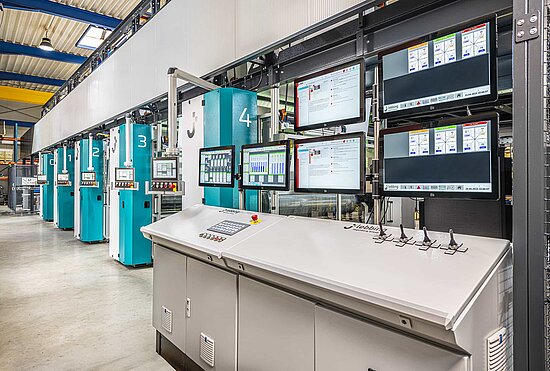
Together with the Kampf GmbH team, I am currently driving the transfer of our Group's IIoT platform the@vanced to the Surface and Energy divisions.
At Lebbing automation & drives GmbH, I am also involved in project acquisition a lot. Here, I am trying to work on the digitalization of processes in the printing sector, in particular. After all, convincing new customers is actually one of the biggest challenges.
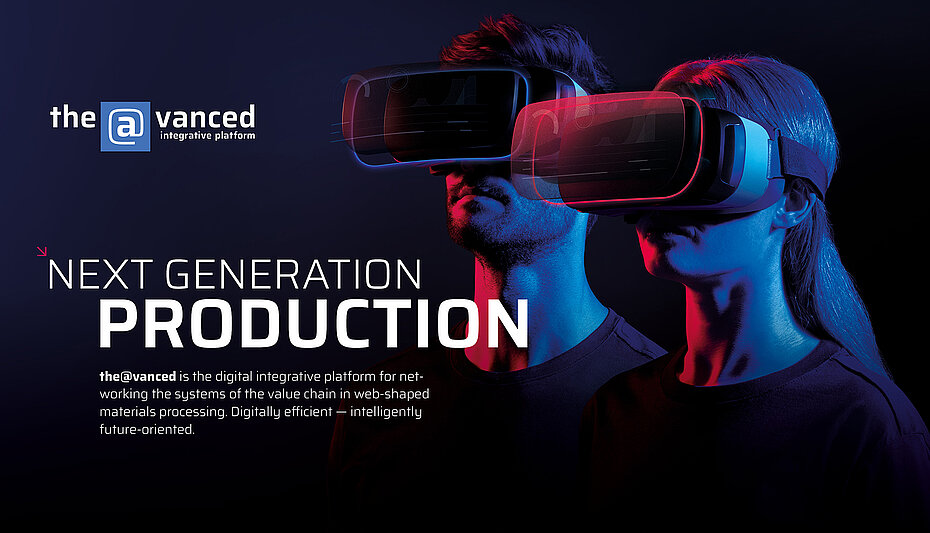
“the@vanced” is an IIoT platform (IIoT = Industrial Internet of Things) for the digitalization and networking of processes in the converting of web-shaped materials. The platform helps to increase the efficiency, transparency and sustainability of production.
Why is that?
In my work, I view data as raw material. I need it in order to be able to work on the solution to a problem. Naturally, this requires the customer to take a leap of faith. They have to provide us with certain data so that we can evaluate and use it. First, to understand their problem in detail, and then to develop a data-driven application which solves their problem. This is not always easy. In a way, it's the classic “hen and egg problem” that has to be overcome first. And that is typical for data science and data-driven product development: Once you have achieved this breakthrough, experience shows that finding a solution becomes much easier. And when we have a foot in the door with the customer, they suddenly come up with new and original ideas all by themselves, and they ask us to work these out with the help of data and within the framework of networked production. This, in turn, requires a lot of research and concept design on my part, so that we can convince the customer of our work.
Which argument, do you think, is most likely to convince customers to make their data available?
Apart from the sustainability aspect, it's clearly hard facts about potential savings and increase in productivity. When customers understand the added value a project generates, they are on board. Saving energy or other resources, therefore, is the biggest sales argument. This has already been demonstrated in the past.
In 2018, for example, I carried out a project with my former apprenticeship company. I was still a doctoral student at the University of Wuppertal at the time. Being a media service provider which works for large fashion mail order companies, among others, they had to crop huge amounts of photos. For the catalog and the online shop, the models and their dresses had to be set against a white background. Until then, this cropping process had to be done entirely by hand, and was, obviously, time-consuming and expensive. Hence, this was often outsourced to Asian service providers.
At the time, me and my colleagues undertook it to train a specific AI on site using the data that had already been released. Eventually, it was able to automatically cut out the models and products in a quality that a human could not. We were able to calculate the savings potential clearly and that was what convinced my former employer. In the end, the project was successful and from then on, the complete cut-out process could be handled in-house again and at significantly lower costs—a real novelty at the time.
When creating new processes, I therefore deliberately focus on tangible goals, such as cost savings or increase in productivity, which ultimately also lead to improved sustainability. This is another aspect of data science which I find so exciting: Data has the power to make the entire production process more sustainable—if you only process it correctly and learn from it.
“In my work, I view data as raw material. I need it in order to be able to work on the solution to a problem. Naturally, this requires the customer to take a leap of faith.”
Dr.-Ing. Tobias Enk,
Data Scientist
That sounds like you have a real passion for data and processes. What exactly fascinates you about your work?
Basically, a machine is a huge data generator. In most cases, only a few of these process data are used, however. Usually, the use of data is limited to the direct control of the machine in a closed-loop approach, i.e., in a classic control concept. What I am interested in is the information that is hidden in this data. I want to use it to generate new digital product ideas. It's a kind of look behind the scenes, where I get to the bottom of things by completely different means than the ones we have been using at the Jagenberg Group to date. This offers a wholly different perspective on processes and grants me the opportunity to create something truly new.
So far, you've done a wonderful job! Is there anything you would still like to accomplish with your work?
I would like to be a sort of pioneer and solve a problem that no one has dared to tackle or for which there is no solution as of yet. In more concrete terms, I'm thinking of the color matching process in the decor sector, for example. Up until now, this has only been done in analog form, and that consumes a lot of resources. If we digitalize it, we will create huge added value for the printing industry. For me, that would be like cracking a tough nut which nobody has been able to crack yet!
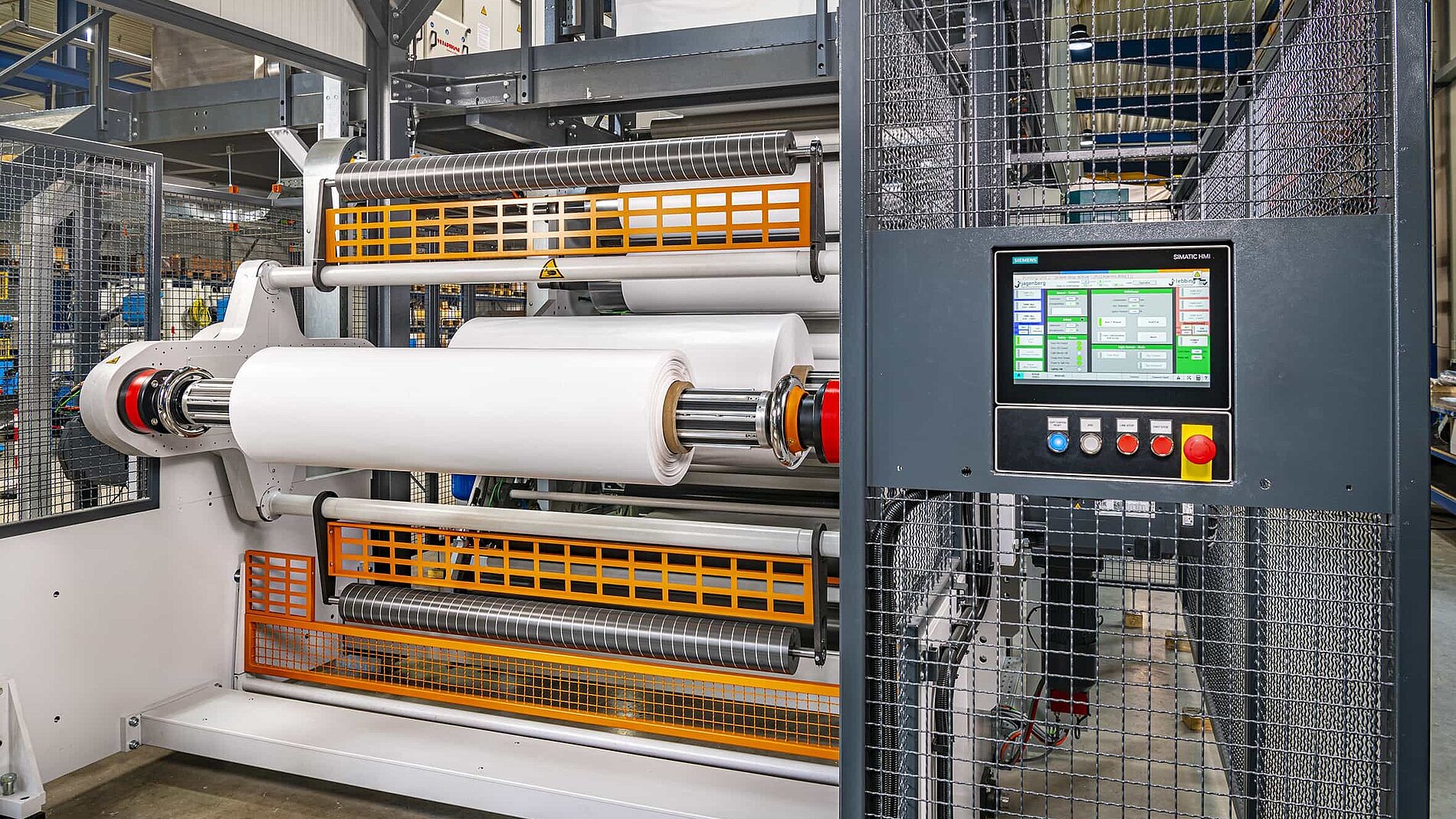
The so-called color matching process is a particularly complex, material-, cost- and time-intensive process step that immediately precedes production printing. The process parameters and, above all, the color recipe are adjusted in several steps so that the visual appearance of the currently produced decor resembles a previously produced decor (master sample) as closely as possible. The main cost drivers here are the production time blocked on the machine for this process and the resources consumed, such as energy, waste, and personnel. The process is one of the most demanding in analog rotogravure printing, and is currently only carried out by experienced printers.
We wish you every success! Dr. Enk, all the best for you and thank you very much for the friendly conversation!